
In the food industry, product coding is not just a regulatory requirement—it’s a critical component of maintaining product safety, quality control, and traceability. By implementing the right coding technologies, you ensure your products meet stringent compliance standards while reinforcing customer trust and enhancing operational efficiency. At Factronics USA, we provide innovative coding solutions that help food manufacturers stay ahead of industry challenges while complying with regulatory guidelines.
Key Benefits of Food Coding: Why It Matters to Your Business
1. Enhanced Traceability for Safety and Quality Assurance
Effective product coding ensures that every item can be traced from its origin all the way to the end consumer. This is essential not only for batch identification but also for managing recalls or quality issues. In industries like food manufacturing, where safety is non-negotiable, having traceable codes allows for quick actions to protect both your brand and consumers.
2. Compliance with Regulatory Standards
Whether you’re shipping to domestic or international markets, food labeling and coding are subject to local and global regulations. From the FDA to FSMA (Food Safety Modernization Act) and HACCP (Hazard Analysis Critical Control Points), clear, legible product information is required on every package. Choosing the right coding solution helps you ensure compliance with these standards, reducing the risk of penalties and ensuring audit-readiness.
3. Optimized Operational Efficiency
Operational efficiency isn’t just about speeding up production—it’s about reducing errors and minimizing costly downtime. Accurate, fast, and efficient coding not only facilitates fast production line speeds but also enhances logistics by making product identification quick and seamless. In high-volume environments, this means fewer delays, fewer errors, and fewer unplanned stoppages.
Choosing the Right Food Coding Method: Tailoring Technology to Your Needs
Inkjet Printing (CIJ): Flexibility Across Materials
Inkjet printing, especially Thermal Inkjet (TIJ) technology, is widely used for printing batch codes, expiration dates, and barcodes on a variety of materials, including plastic, cardboard, and metal. It’s ideal for fast-paced production lines and provides the flexibility to change codes frequently without slowing down the process.
For manufacturers facing high-volume production, CIJ systems provide the speed and adaptability needed to ensure both compliance and efficiency.

Laser Coding: Permanent Solutions for Long-Term Compliance
When permanent, non-contact marking is required, laser coders are the preferred solution. Laser technology creates durable, abrasion-resistant markings on glass, metal, or rigid plastic containers. This makes it ideal for high-end food products that require long-term traceability and retail compliance without the need for consumables like ink or solvents.
For compliance-driven sectors like pharmaceutical and high-value food packaging, laser coding ensures that codes remain legible for the entire lifecycle of the product, making it a smart choice for businesses looking to improve traceability.
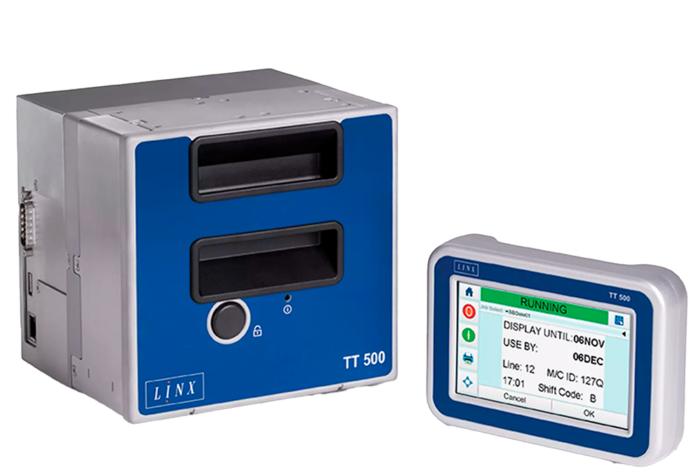
Thermal Transfer Overprinting (TTO): Ideal for Flexible Packaging
In industries dealing with flexible packaging, such as snacks or bakery products, TTO printers offer clear, durable printing that resists wear and tear. These printers are perfect for snack bags, bakery wrappers, and other flexible materials that face the rigors of transportation and shelf life.
TTO printing ensures your packaging remains legible and compliant throughout the product’s life cycle, providing customers with essential information without compromising packaging integrity.
Best Practices for Implementing Food Coding Technology
1. Select the Right Equipment for Your Product
Choosing the right coding technology depends on several factors, including the type of material used in packaging, the speed of your production line, and the regulatory requirements you must meet. At Factronics USA, we help you evaluate your needs and recommend solutions that fit your specific goals, from flexibility in code changes to permanent, tamper-proof markings.
2. Regular Maintenance for Optimal Performance
Whether you choose inkjet, laser, or TTO technology, regular maintenance is crucial to ensure that your printers operate at peak efficiency. This includes checking for clogs, ink levels, and worn parts—all of which can cause costly production stoppages if neglected. In industries like food manufacturing, where speed is crucial, even small delays can translate to big losses.
3. Staff Training for Efficient Operation
Proper staff training is essential for ensuring that your coding systems are used effectively. When your team is well-versed in the operation of the printers, they can troubleshoot minor issues on the spot and maintain high standards of print quality. In high-demand industries like food processing, this can mean the difference between a smoothly running operation and costly downtime.
Conclusion: Implementing Food Coding for Compliance and Efficiency
In the food industry, effective coding systems are essential for ensuring product traceability, safety, and compliance with regulatory standards. The right technology helps streamline production, improve efficiency, and ultimately boost consumer confidence in your products.
Whether you’re dealing with high-speed production lines, flexible packaging, or the need for permanent coding, Factronics USA offers a variety of coding solutions to suit your unique needs.
Need help selecting the best food coding technology?
At Factronics USA, we provide expert advice and tailored solutions to improve your production line. Contact us today for a consultation or to schedule a demo.